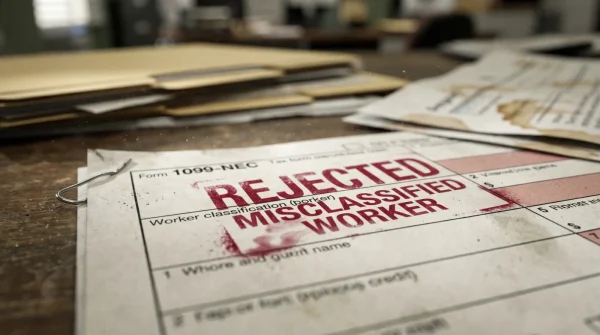
You sit at the kitchen counter, the low hum of the refrigerator blending with the faint smell of morning rain through the screen door. Your fingers smooth the edges of a single, printed sheet of paper. It is a standard form you downloaded years ago, saved in a familiar desktop folder, relied upon as a simple, mechanical way to reclaim your property when a lease falls apart. You fold it carefully into thirds, pressing the creases flat, expecting this quiet administrative chore to trigger a predictable and logical legal resolution.
But the administrative machinery governing your asset has quietly replaced its gears. Across local jurisdictions, courts have decided to toss standard lease terminations straight into the rejection pile, treating them as if they were drafted in invisible ink.
A massive, silent shift in housing policy has occurred. Major governing bodies, reacting to unprecedented surges in housing displacement data, have executed a fundamental pivot in their rules. Federal guidelines, trickling rapidly down into municipal courts, have effectively rewritten the vocabulary of property management overnight. The paperwork you hold is suddenly a relic of a bygone regulatory era.
You might assume a clear breach of contract speaks for itself. Yet, missing a single sentence of updated compliance phrasing will halt your legal momentum, leaving you paying the mortgage on an occupied home you no longer control.
The Phantom Cogs of Property Possession
Think of the modern legal system not as a series of straightforward doors, but as an intricate combination lock. For decades, a simple signature, an address, and a date were enough to turn the handle. The burden of proof was minimal, resting largely on the basic math of unpaid balances or expired terms. Today, the mechanism demands a highly specific sequence of federally mandated phrases to even register your intent to the court clerk.
This shift is not a punishment, though it feels exactly like walking against a heavy wind. It is a sudden agency pivot designed to mandate tenant awareness, meaning you must adopt updated federal phrasing to survive the first glance of an over-burdened judge.
When you treat this mundane detail as a major advantage, the frustration dissolves. A hyper-compliant document becomes a skeleton key in a system designed to block access. While other landlords crowd the courthouse lobbies, angrily resubmitting rejected forms and bleeding weeks of lost revenue, your pristine, updated paperwork slides effortlessly through the bureaucratic friction.
- Independent contractor status faces immediate massive federal tax audits
- Warranty deed titles leave homes exposed to predatory liens
- LLC formation services mask steep recurring registered agent fees
- Building permit rejections stem from one missing structural dimension
- Flight cancellation compensation requires specific federal terminology for payouts
It transforms a glaring vulnerability into a quiet asset. Surgical precision replaces mounting anxiety, ensuring that your property rights bypass the current backlog with undeniable authority.
Consider Marcus Thorne, a fifty-two-year-old property manager overseeing a dozen modest duplexes in Ohio. He runs his business from the cab of an aging pickup truck, keeping meticulous records in a battered leather portfolio. Last November, Marcus served a routine thirty-day notice, identical to the ones he had used for fifteen years. He walked into court expecting a five-minute hearing, only to have the magistrate dismiss his case entirely because his standard form lacked a newly required, fourteen-word federal disclosure regarding rental assistance rights.
Marcus lost three months of rent, paid out thousands in avoidable attorney fees, and had to start the clock over. He quickly learned that memorizing the new technicalities was the only way to insulate his family’s livelihood against a rapidly evolving bureaucracy.
Filtering the Mandate by Property Type
Not all properties absorb these regulatory shifts in the exact same way. The rules bend, flex, and apply different weights depending on the scale of your operation and the specific nature of your rental agreements. Understanding your exact placement in this ecosystem dictates your next move.
For the Single-Family Steward, the risk is intensely personal and immediate. A single delayed ruling threatens your primary financial safety net, making it absolutely critical to audit your current templates before a conflict ever materializes.
For the Multi-Unit Operator, the danger scales exponentially with volume. Relying on legacy software that automatically generates outdated notices can poison an entire batch of lease enforcements. It turns a localized, easily managed issue into a systemic operational failure across your entire portfolio.
For the Accidental Landlord—perhaps you are managing an inherited childhood home—the learning curve feels incredibly steep. You cannot rely on conventional neighborhood wisdom, as the courts expect you to operate with professional exactness regardless of your personal experience level.
Drafting the Ironclad Notice
Updating your approach requires mindful, deliberate steps rather than frantic internet searches for free templates. You are building a vessel designed to hold water under extreme pressure. Every word is a rivet, and every missing phrase is a leak.
Approach the drafting process like a seasoned craftsman measuring expensive wood. You must carefully verify the exact terminology demanded by the overlap of your municipal, state, and federal jurisdictions.
- The Federal Disclosures: Embed the exact phrasing regarding federal housing protections or financial assistance programs exactly as required in your local jurisdiction. Do not paraphrase; copy the statutory language verbatim.
- The Timing Metric: Calculate the notice period using the updated calendar definitions. Many new rules exclude weekends and holidays from the initial count, meaning a simple three-day notice might actually require a full calendar week to mature.
- Delivery Mechanics: Execute the delivery precisely as the new mandate outlines. Judges are increasingly looking for a dual-method approach, requiring both certified mail with tracking and a physical, securely taped posting on the primary entry door.
Each of these mindful steps removes a potential defensive argument from the opposing side. It creates a seamless, indisputable narrative of compliance that the court clerk can easily verify without passing it up the chain for review.
The physical form itself should look undeniably formal and rigidly structured. A clean layout with distinct, bolded headers forces the reviewer to recognize your strict compliance instantly, establishing your credibility the moment the paper leaves your hand.
The Quiet Peace of Mastery
There is a distinct, physical relief that comes from knowing your administrative house is entirely in order. The profound stress of property management often stems from the unknown, from the lingering fear that a minor, unseen oversight will suddenly unravel a major financial investment.
Mastering the nuances of this shifting regulatory landscape fundamentally changes your relationship with your property. You are no longer crossing your fingers and hoping for a favorable outcome; you are quietly engineering one, ensuring that you protect your peace of mind through impeccable, deliberate preparation.
A court does not read your intentions; it only reads your exact compliance with the statute on the day you filed.
| Key Point | Detail | Added Value for the Reader |
|---|---|---|
| Legacy Notices | Standard templates lacking federal disclosures and updated jargon. | Highlights the immediate financial risk of court rejection. |
| Mandated Notices | Documents featuring exact, verbatim phrasing required by new agency pivots. | Provides a skeleton key to bypass administrative backlogs. |
| Delivery Method | Dual-method execution, combining certified tracking with physical posting. | Removes plausible deniability from the tenant in a court setting. |
Frequently Asked Questions
Why was my standard eviction notice thrown out by the judge?
Courts are enforcing new federal and municipal mandates that require specific language regarding tenant rights and rental assistance. Without these exact phrases, your notice is legally invalid.Do these new requirements apply to single-family homes?
Yes. While the scale differs, the legal expectation of professional exactness applies equally to single-family owners and massive multi-unit operators.Can I just add a sentence to my old template?
It is highly risky. You must use the verbatim statutory language required by your specific jurisdiction to ensure compliance.How do weekends affect the notice period?
Many updated rules exclude weekends and legal holidays from the count. A required three-day notice served on a Friday often does not legally mature until the following Wednesday.What is the best way to prove I delivered the notice?
Employ a dual-method approach. Send the document via certified mail with a tracking receipt, and physically tape a copy to the primary entry door, taking a time-stamped photo as proof.