You see the red and blue strobes paint the interior of your car before you hear the siren. The gravel crunches under the tires as you pull onto the shoulder, your mind racing to recall the last speed limit sign you passed. A few moments later, the officer hands you a yellow slip of paper with a number printed in a stark, black font: 82 mph. Sitting there in the idling car, that number feels definitive. It feels like an irrefutable mathematical fact, handed down directly by the state.
Most of us simply accept the paper, slide it into the glovebox, and mentally calculate the upcoming insurance premium hike. We assume that a radar gun reading is flawless, a piece of infallible technology that sees the physical world in absolute terms. You pay the fine without a fight because arguing with a police computer feels like shouting at a brick wall.
But that stark black number isn’t a fact; it is a mechanical estimation. Radar guns are highly sensitive, easily bruised pieces of equipment that spend their lives bouncing around the hard plastic center consoles of patrol cruisers, enduring wild temperature swings from freezing night shifts to blistering summer afternoons.
They are practically begging to fall out of sync with reality. Think of a radar device not as a calculator, but as a finely strung guitar. If you leave an acoustic guitar in a hot trunk for three days and then hand it to a musician, the notes will sour. The machine requires constant tuning, achieved through specific mechanical calibrations. If the tuning is skipped, the song is wrong. Your speed reading might just be a sour note played by an untuned instrument.
The Perspective Shift: From Guilt to Maintenance
Ask Marcus Thorne, a 48-year-old former municipal traffic officer who now consults on defense cases in Ohio. ‘I used to watch guys drop the metal tuning forks used to calibrate these guns right onto the concrete pavement,’ Thorne recalls. ‘A dented fork rings at the wrong frequency. Suddenly, a minivan doing the exact speed limit registers at fifteen miles over. The machine didn’t lie; it just repeated a bad baseline.’ Thorne’s experience highlights a massive blind spot in local enforcement: the human error in maintaining the hardware.
This changes your entire approach to handling a citation. You are no longer arguing a subjective feeling that you ‘weren’t going that fast.’ Instead, you are questioning the mechanical integrity of the state’s equipment. You pivot away from defending your driving and focus entirely on auditing their paperwork. If the instrument measuring your speed cannot legally prove it was sober and functional, the measurement ceases to exist in the eyes of the court.
- Eviction notice requirements shift drastically under new housing mandates
- Independent contractor status faces immediate massive federal tax audits
- Warranty deed titles leave homes exposed to predatory liens
- LLC formation services mask steep recurring registered agent fees
- Building permit rejections stem from one missing structural dimension
Segmenting the Speed Trap
Not all speed tracking is identical. How you challenge that yellow piece of paper depends heavily on the environment where the reading was taken and the specific technology pointed at your bumper.
For the Interstate Commuter: Highway patrol often relies on LIDAR (laser), which requires a steady hand and a clear line of sight. These devices must be calibrated at the beginning and end of every single shift. If the officer hit a pothole spilling coffee at 10 AM, and clocked you at 2 PM, that device might have shifted internally. The margin for error is measured in millimeters, making strict daily logs the only proof of accuracy.
For the School Zone Driver
Municipal police frequently use traditional Doppler radar, sometimes mounted directly to the cruiser’s dashboard. These are notoriously susceptible to environmental interference, from rotating fan blades in the patrol car’s engine to nearby high-tension power lines.
They demand rigorous monthly maintenance logs from an independent technician to prove they are isolating the speed of your car and not the local wind patterns. If the local precinct skipped their quarterly tech review to save budget, every ticket issued by that cruiser is fundamentally compromised.
Mindful Application: The Administrative Pivot
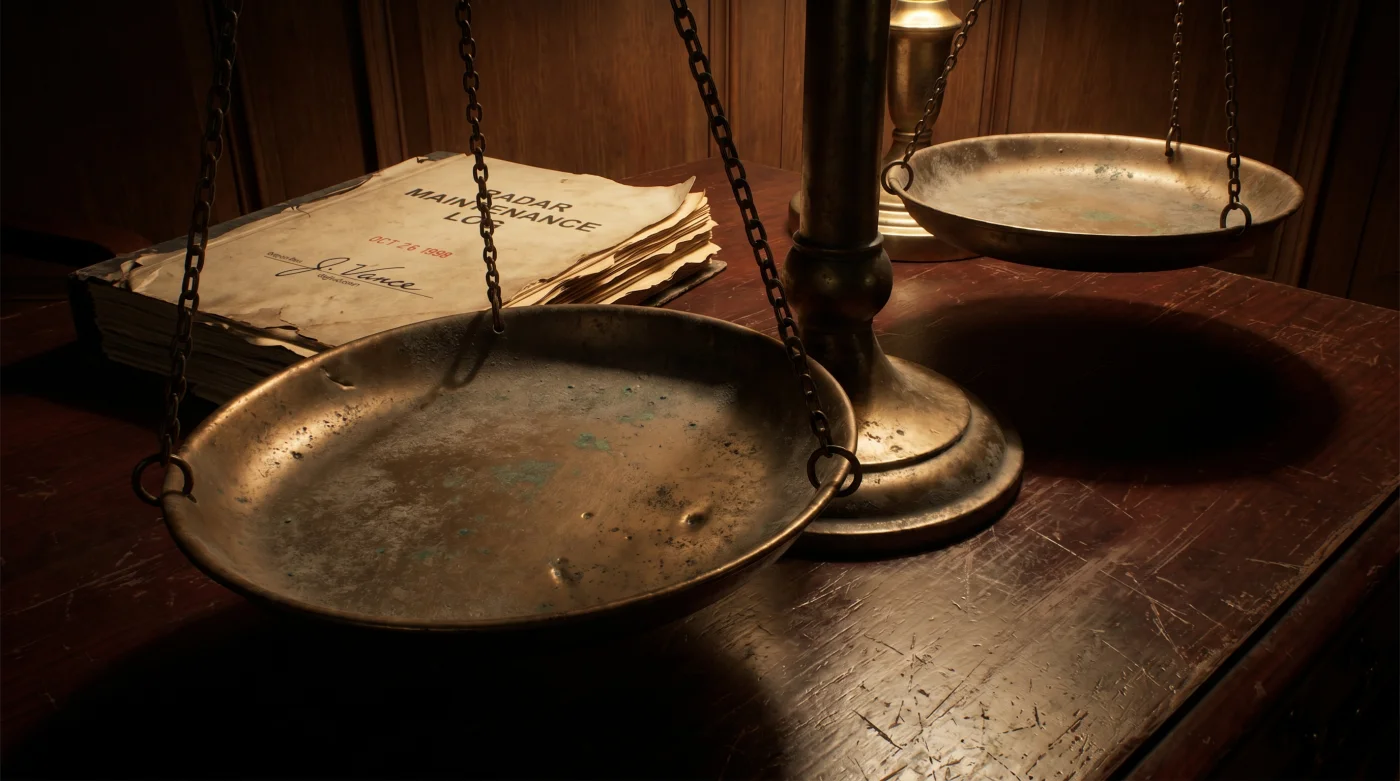
This is where you utilize the bureaucracy to your advantage. The legal system relies heavily on procedural momentum. Requesting the maintenance log acts like a stick in the spokes of that momentum. When you request the calibration records through a standard legal motion, the prosecutor must physically track down the maintenance history and the daily tuning fork logs for that specific serial number.
Here is your tactical toolkit for stopping the administrative machine in its tracks:
- The Request: File a formal written request for ‘Discovery’ with the court clerk the moment you plead not guilty by mail.
- The Target: Ask specifically for the ‘tuning fork certificates’ and the ‘officer’s daily calibration log’ for the exact radar unit serial number cited on your ticket.
- The Timeline: Submit this request at least 30 days before your scheduled hearing. Bureaucracy moves like molasses, and you need to give them ample time to fail to produce the documents.
- The Result: If the prosecutor cannot produce a log showing the device was calibrated within the legally mandated timeframe, you simply ask the judge to suppress the radar evidence. Without the reading, the charge collapses automatically.
Reclaiming the Margin of Error
Filing this paperwork is not a trick to avoid personal responsibility. It is a fundamental assertion of your rights within a system that prefers quiet compliance. Local municipalities build their budgets on the assumption that you will simply mail in a check without asking a single question about how the sausage is made.
Holding the system accountable forces local governments to maintain their equipment, ensuring fairness for everyone on the road. When you ask to see the math behind the machine, you remind the state that its authority is conditional. You restore the balance. You turn a stressful roadside encounter into a quiet, methodical victory over a bloated administrative process.
Never argue with the officer on the shoulder of the road; argue with the machine’s maintenance history in the quiet of the courtroom.
| Strategy | The Approach | Added Value for the Reader |
|---|---|---|
| The Passive Payer | Accepting the ticket and paying the fine immediately. | Zero friction, but guarantees higher insurance premiums and points on your license. |
| The Emotional Arguer | Going to court to verbally contest your driving speed. | Often results in a loss; judges side with the officer’s testimony over a driver’s memory. |
| The Procedural Auditor | Requesting radar calibration and maintenance logs via Discovery. | High probability of case dismissal if the precinct has poor equipment record-keeping. |
Frequently Asked Questions
Is it expensive to file a Discovery request? No, filing for discovery is typically a free administrative right when defending yourself against a traffic violation, though you may pay a few dollars for postage or copying fees.
Will the judge be annoyed if I ask for this data? Judges respect procedural law. Asking for evidence verification is a standard, expected legal process, not a personal insult to the court.
What if they actually provide perfect maintenance logs? If the logs are flawless, you are in the same position as before. You can still negotiate for a lesser charge or choose to pay the fine, having lost nothing by checking.
Do I need a lawyer to request calibration records? While a lawyer makes it effortless, an individual citizen absolutely has the right to file a pro se request for discovery with the municipal court clerk.
How often do police actually fail to maintain these logs? Surprisingly often. Small towns and underfunded precincts frequently lapse on third-party radar calibrations to save time and municipal budget money.