You stand at the local post office counter, shifting your weight as the fluorescent lights hum a low, indifferent tune. Your upcoming vacation feels both thrilling and terrifyingly fragile, hinging entirely on a small, navy-blue booklet making its way back to your mailbox in time.
The clerk asks the inevitable question: “Standard or overnight?” Driven by the anxiety of missed flights and ruined itineraries, you pull out your credit card. You choose the premium option, convinced that throwing money at a federal agency is the only guaranteed way to make the gears move faster.
It is a completely logical assumption, born from a culture that equates hefty price tags with priority speed. You imagine your heavy cardboard mailer being rushed onto a dedicated transport truck, handed off with a salute to a passport processor waiting at a polished mahogany desk.
But the reality of government logistics tells a vastly different story. That thick, bright express envelope you just bought didn’t secure you a place at the front of the line; it effectively derailed your application, dropping it right into the darkest corner of the processing facility.
The Paradox of the Priority Bin
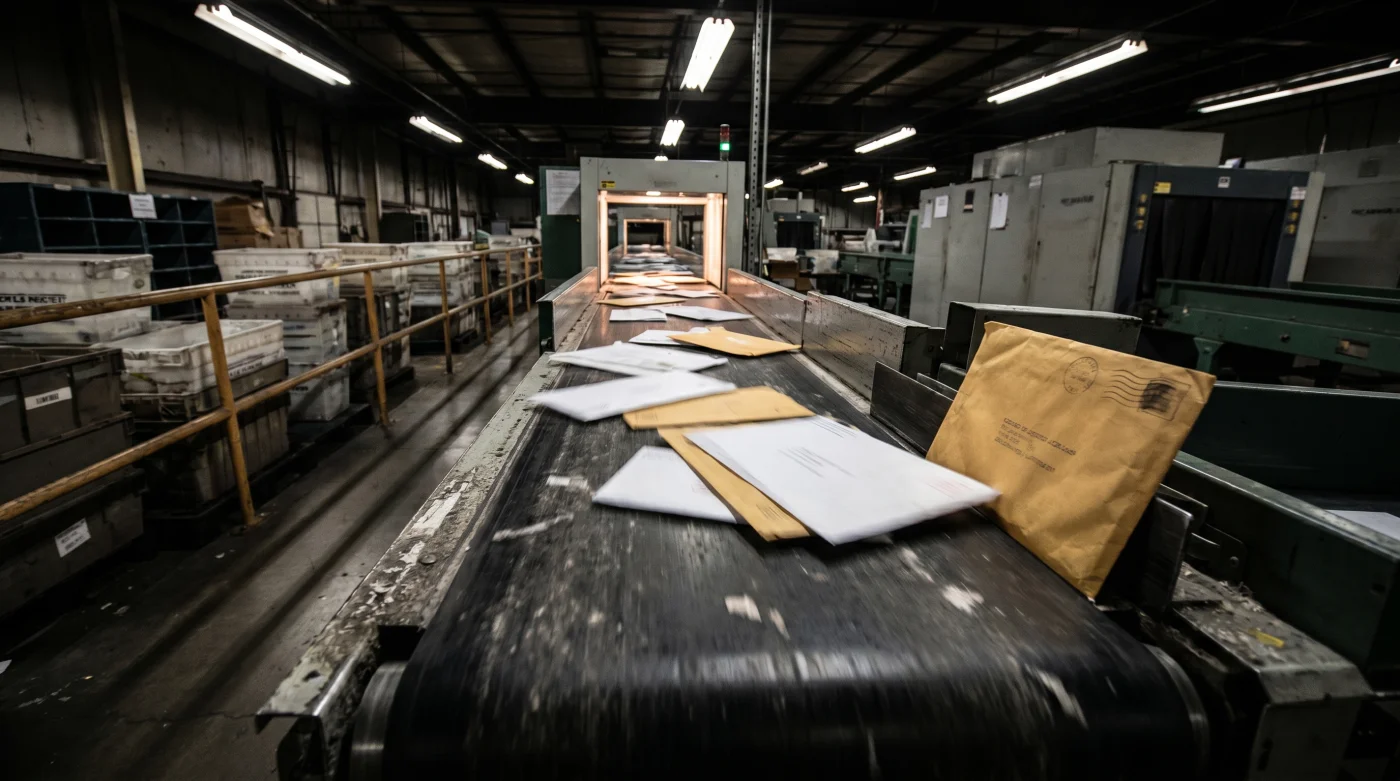
To understand why standard shipping currently beats expedited transit, you have to look at the massive machinery that powers our federal mail system. Think of standard mail as water flowing down a smooth, heavily pitched gutter. It moves effortlessly because the system was designed specifically to handle it in massive volume without human hesitation.
When you attach priority, certified, or express tracking services to a passport renewal, you change the physical dimensions and routing requirements of the envelope. You alter its digital footprint, inadvertently demanding manual intervention from an already overburdened workforce.
Standard first-class envelopes slide directly into high-speed optical scanners that read routing barcodes at tens of thousands of pieces per hour. They are sorted, grouped, and delivered to automated processing tracks at the passport facility before a human ever touches them. Expedited envelopes, however, are treated as anomalies.
Because they require signature logs or special handling verifications, they are pulled from the automated track. You hit a bureaucratic traffic jam, paying a premium to sit in a secondary wire cage while waiting for a worker to physically scan and sort your envelope by hand.
Marcus Thorne, a 58-year-old retired postal logistics supervisor from Philadelphia, spent three decades watching this exact bottleneck. He recalls standing on the catwalks above the sorting floor in late spring, watching frantic travelers overnight their renewals. “They’d spend thirty bucks to put a giant red target on their application,” Marcus says. “Those express mailers couldn’t go through the primary sorters. We had to dump them in hampers and wait until someone had the overtime hours to process them by hand. The guy who spent sixty-eight cents on a stamp had his application cleared to the State Department three days before the express guy.”
Adjusting Your Bureaucratic Approach
Not all renewals share the exact same urgency, and recognizing where you fit on the timeline dictates your mailing strategy. Stop treating every form identically and start matching your postal method to the system’s actual mechanical behavior.
For the Routine Renewer
If your trip is more than eight weeks away, standard first-class mail with a basic tracking number is your greatest asset. Keep the envelope flat, flexible, and free of unnecessary bulk. The machines will pull it through the sorting belts with zero friction, ensuring it hits the passport agency’s intake scanners on day one.
For the Name Changer
When you are legally changing your name, you are required to submit original court documents or heavy marriage certificates. This alters the processing reality, as these thicker, rigid documents often trigger manual sorting regardless of the shipping method you choose. In this specific scenario, paying for a tracked, rigid mailer is acceptable because your envelope is already destined for the manual pile—you might as well protect the birth certificate.
For the Last-Minute Panic
If your flight boards in fourteen days, the mail system can no longer save you. You must abandon the post office entirely and secure an in-person appointment at a regional passport agency. Do not attempt to express mail an application expecting a miracle turnaround; the transit time alone will burn through your remaining window.
A Frictionless Path to the Blue Book
Preparing your application for optimal automated sorting requires a mindful, minimalist approach. Resist the urge to overcomplicate the presentation of your documents and trust the simplicity of standard mailing.
Use a standard heavy-paper envelope, but avoid the rigid cardboard express mailers unless absolutely necessary for document protection.
The postal machinery loves conformity. Ensure your staples are flush and your forms are folded cleanly if using a smaller envelope, though a flat 9×12 envelope is heavily preferred to prevent document jams.
Tactical Toolkit:
- Envelope Size: A flat, flexible 9×12 manila or white envelope allows documents to lay flat, reducing scanner jams.
- Postage: Standard First-Class Mail with a basic tracking add-on. Avoid Priority or Express upgrades.
- Document Alignment: Staple the photo exactly where indicated on the form, using four corner staples tightly pressed down.
- Payment: Use a printed personal check. Handwritten checks with heavy, flourishing ink can occasionally fail optical character recognition at the treasury level, pausing your application.
Finding Rhythm in the Red Tape
There is a profound sense of relief in understanding how massive systems actually function behind closed doors. You no longer have to guess, nor do you need to throw money at a problem hoping it will magically lubricate the gears of government.
Bureaucracy, despite its frustrating reputation, is just a giant machine governed by physics, digital logic, and volume processing. It craves predictability. It rewards those who feed it exactly what it expects, in the exact format it prefers to digest.
By slipping your standard envelope into the mail stream, you aren’t settling for less. You are choosing the path of least resistance. You are letting the current carry your paperwork effortlessly to its destination, bypassing the manual bottlenecks and freeing your mind to focus on the trip ahead.
“The system doesn’t care how much you paid for postage; it only cares how fast its cameras can read your barcode.” — Marcus Thorne, Retired Logistics Supervisor
| Key Point | Detail | Added Value for the Reader |
|---|---|---|
| Standard Mail Speed | Bypasses manual sorting cages and feeds directly into optical scanners. | Saves you weeks of waiting in a backlog. |
| Express Mail Trap | Requires signature logs and manual handling by postal workers. | Prevents you from wasting $30+ to accidentally delay your paperwork. |
| Document Formatting | Use 9×12 flat envelopes and printed checks for clean machine reading. | Eliminates automated rejection errors at the treasury level. |
Frequently Asked Questions
Does standard shipping affect the State Department’s actual processing time?
No. The shipping method only impacts how quickly your application reaches the intake desk. Once the State Department opens the envelope, processing times are based on the agency’s current backlog, not how the envelope arrived.Can I still buy standard tracking on a first-class envelope?
Yes. You can request First-Class Mail with tracking. This provides a barcode for peace of mind without upgrading the envelope class to a manual-sort category.What if I pay for expedited processing but use standard shipping?
This is actually the optimal strategy. You pay the State Department the extra $60 fee for faster processing on their end, but you use standard mail to ensure the envelope gets to their desk without postal delays.Do rigid mailers always cause delays?
Rigid mailers cannot pass through the high-speed optical belts that bend and flex. They must be sorted by hand, which inherently takes longer during high-volume travel seasons.Is this strategy viable if I am applying for my very first passport?
First-time passports require an in-person visit to an acceptance facility (like a post office or library). The agent there will bundle and mail your documents, so you do not control the shipping method in the same way you do for a mail-in renewal.